Shoulder pain can make it difficult to work on a laptop, lift objects or even sleep comfortably. Many patients who visit Swastik Bone & Joint Clinic in Viman Nagar are unsure whether they have a frozen shoulder or a rotator cuff tear, because both can cause pain and difficulty lifting the arm. The conditions are very different in how they behave, how they are treated and how long they take to recover, so getting the correct diagnosis from a best orthopedic doctor in viman nagar is essential.
This blog explains the key differences between frozen shoulder and rotator cuff tear in simple language and helps you understand when to see an arthroscopy surgeon in Viman Nagar or ortho surgeon in viman nagar for specialist care.
What is Frozen Shoulder?
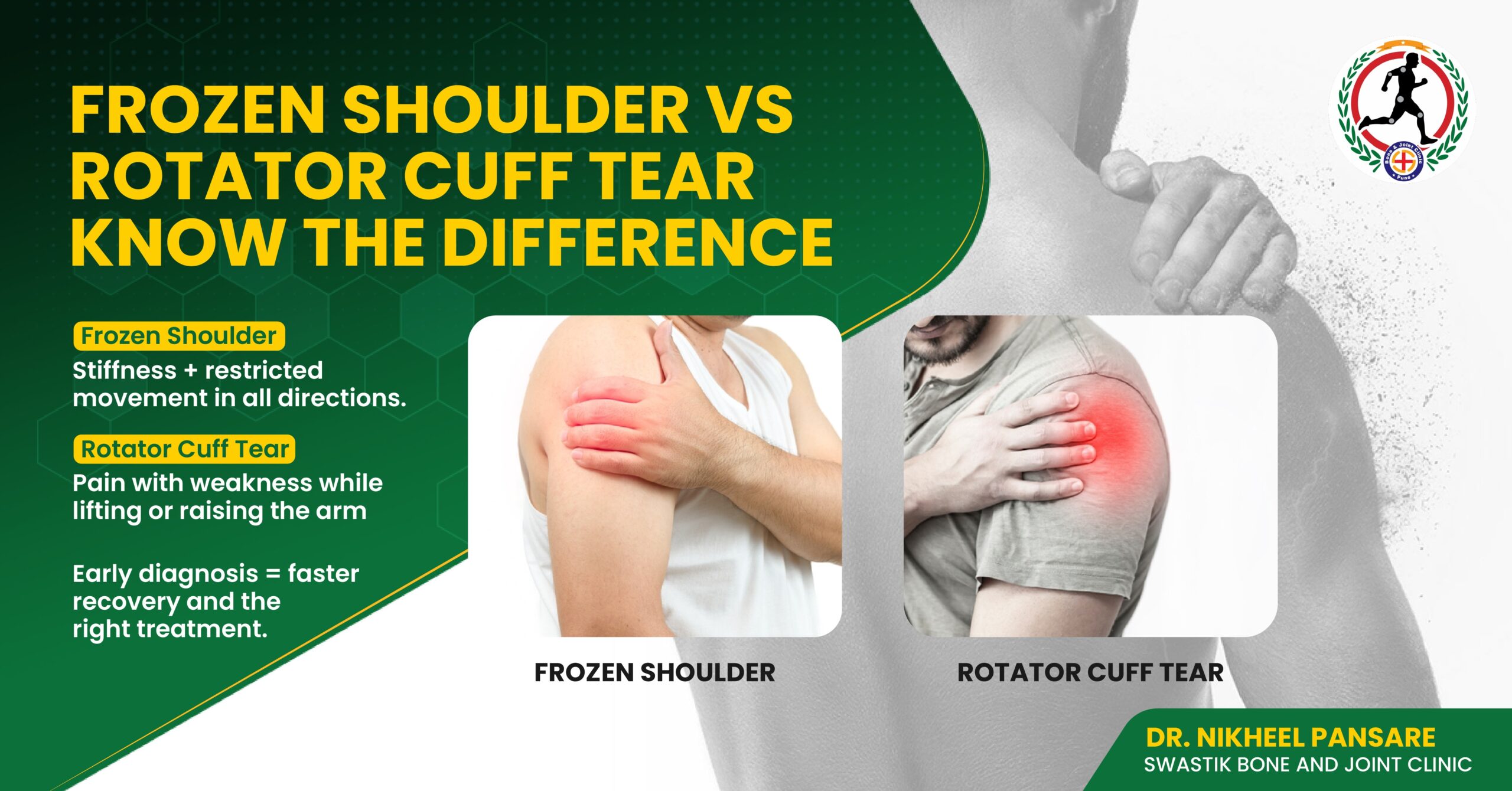
Frozen shoulder (adhesive capsulitis) is a condition in which the capsule around the shoulder joint becomes inflamed, thickened and tight, leading to pain and progressive stiffness. Both active and passive movements become restricted, and simple tasks like combing hair, reaching overhead or behind the back feel very difficult. Typical features of frozen shoulder include:- Gradually increasing shoulder pain, often worse at night.
- Progressive loss of movement in all directions.
- Stiffness even when someone else tries to move your arm.
What is a Rotator Cuff Tear?
The rotator cuff is a group of muscles and tendons that surround the shoulder joint and help lift and rotate the arm. A rotator cuff tear occurs when one or more of these tendons are partially or completely torn, either due to injury or degeneration over time. Common rotator cuff tear features are:- Pain on lifting the arm, especially to the side or overhead.
- Weakness when trying to lift or hold an object away from the body.
- Pain at night, especially when lying on the affected side.
- Sometimes, a feeling of catching or clicking in the shoulder.
Frozen Shoulder vs Rotator Cuff Tear: Key Differences
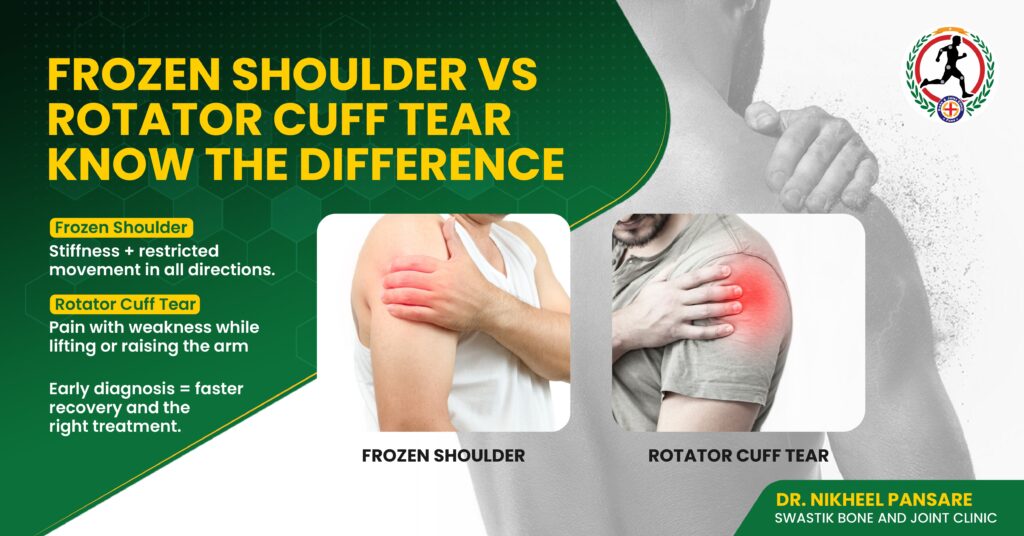
Although both conditions cause pain and limit movement, there are important differences. Onset- Frozen shoulder: Usually slow, without a clear single injury. Pain and stiffness creep up over weeks or months.
- Rotator cuff tear: Can be sudden after an injury or gradual with overhead activities or age-related degeneration.
- Frozen shoulder: Stiffness in all directions is the main issue; pain is often diffuse around the shoulder.
- Rotator cuff tear: Weakness and pain on specific movements (like lifting sideways) are more prominent.
- Frozen shoulder: Both active and passive range of motion are limited; even the doctor cannot move the arm fully.
- Rotator cuff tear: Active range is reduced due to weakness, but passive range may be near normal; the doctor can move the arm further than you can on your own.
How Are These Conditions Diagnosed?
Diagnosis typically involves:- Detailed history: Onset of pain, any injury, night pain, medical conditions.
- Clinical examination: Range of motion, strength tests and specific shoulder maneuvers.
- X-rays: To rule out arthritis or bone problems.
- Ultrasound or MRI: To see the rotator cuff tendons and joint capsule in more detail.
Treatment: Non-Surgical vs Surgical Options
Frozen shoulder often improves with non-surgical treatment:- Pain-relief and anti-inflammatory medicines.
- Physiotherapy to gradually stretch and mobilise the joint.
- Injections in selected cases to reduce inflammation and pain.
- Small or partial tears: Often managed with medicines, physiotherapy and activity modification.
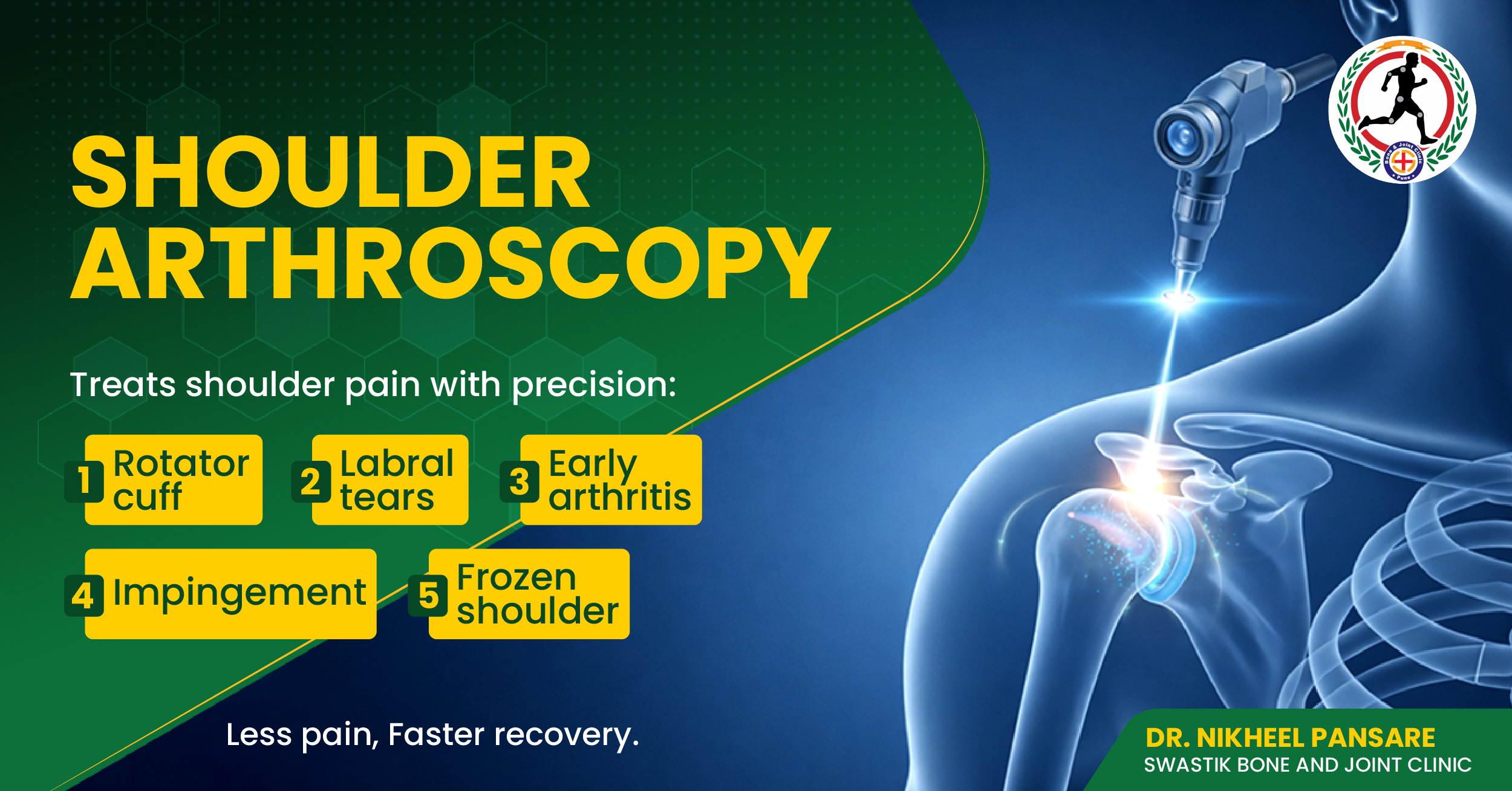
- Large, full-thickness or traumatic tears: May require arthroscopic repair by a Best arthroscopy surgeon in Viman Nagar to restore strength and prevent long-term damage.
When Should You Seek Treatment in Viman Nagar?
You should see a specialist if:- Shoulder pain has lasted more than a few weeks.
- You notice progressive stiffness or weakness.
- Pain disturbs your sleep or limits daily activities.
- You had a fall or sudden injury and now cannot lift your arm normally.