Pain around or behind the kneecap is one of the most common reasons active people and office goers visit Swastik Bone & Joint Clinic in Viman Nagar. Many are told they have “runner’s knee” or patellofemoral pain syndrome (PFPS), even if they do not run regularly. The good news is that PFPS usually responds very well to the right non-surgical treatment, and surgery is rarely the first option when managed properly by an experienced orthopedic doctor in Viman Nagar or best orthopedic doctor in viman nagar.
This blog explains what PFPS is, why it happens, and which non-surgical treatments actually work before you ever need to think of an arthroscopy surgeon in Viman Nagar or knee replacement surgeon in viman nagar.
What is Patellofemoral Pain Syndrome (Runner’s Knee)?
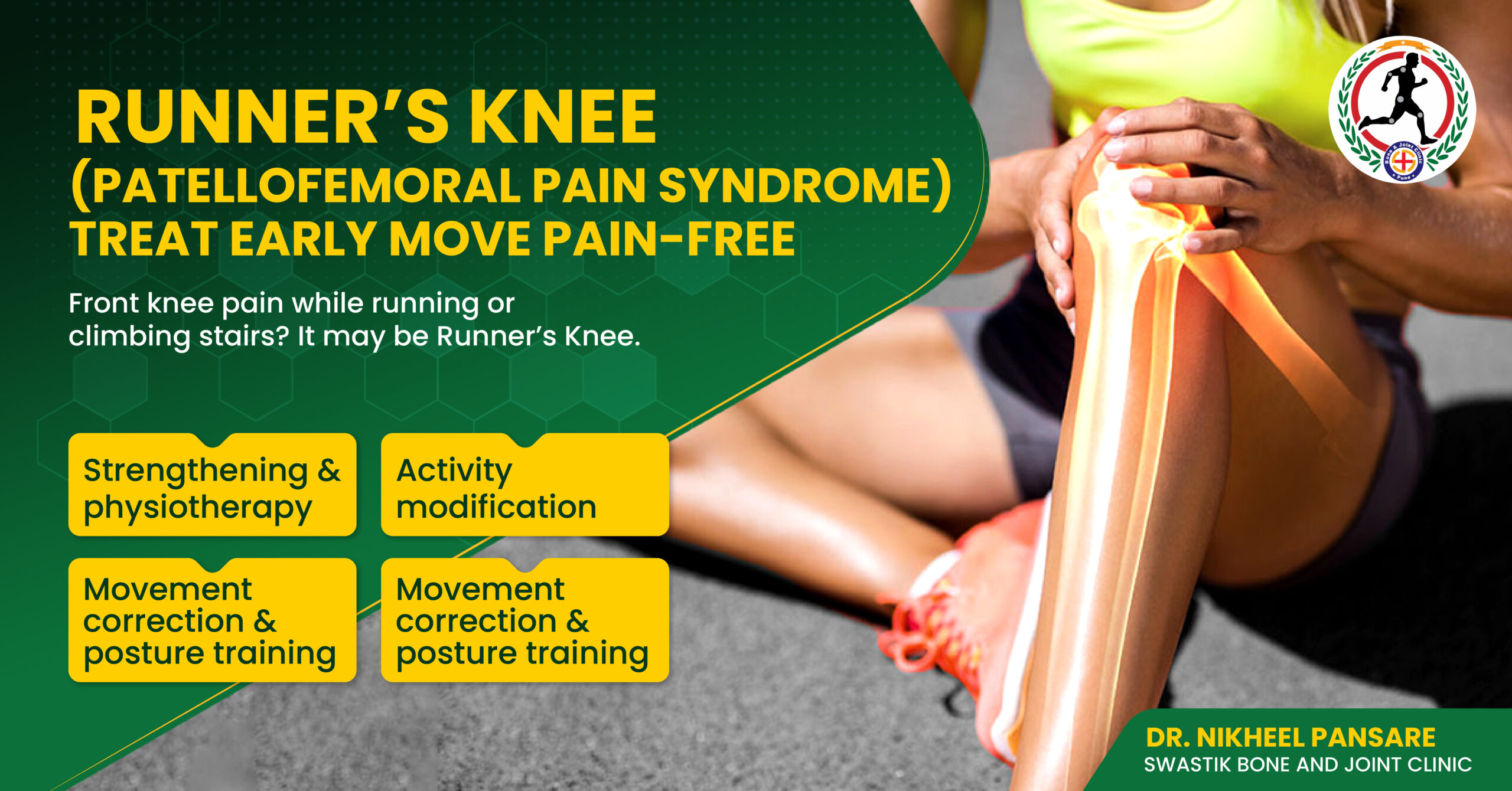
Patellofemoral pain syndrome refers to pain coming from the joint between the kneecap (patella) and the groove at the end of the thigh bone (femur). It is common in runners, cyclists, gym goers and people who sit long hours with bent knees, but can affect anyone. Typical symptoms include:- Pain around or behind the kneecap, often dull and aching.
- Pain while climbing stairs, squatting, running, or sitting for long with knees bent.
- Occasional grinding, clicking or a feeling that the kneecap is not moving smoothly.
Why Does Runner’s Knee Develop?
Common contributing factors are: Muscle imbalance or weakness Weak quadriceps, hip and core muscles can allow the kneecap to track slightly off-centre, increasing stress on certain areas. Tight soft tissues Tight hamstrings, calf muscles or iliotibial band (IT band) can pull the patella out of its ideal path. Overuse and training errors Sudden increase in running distance, hill workouts, or jumping activities without adequate conditioning can overload the patellofemoral joint. Foot and alignment issues Flat feet or altered biomechanics can change the way forces pass through the knee, contributing to PFPS. Because these factors differ from person to person, a customised plan from a sports injury specialist in viman nagar or sports injury doctor in viman nagar works better than a generic “rest and painkiller” approach.Non-Surgical Treatments That Actually Work
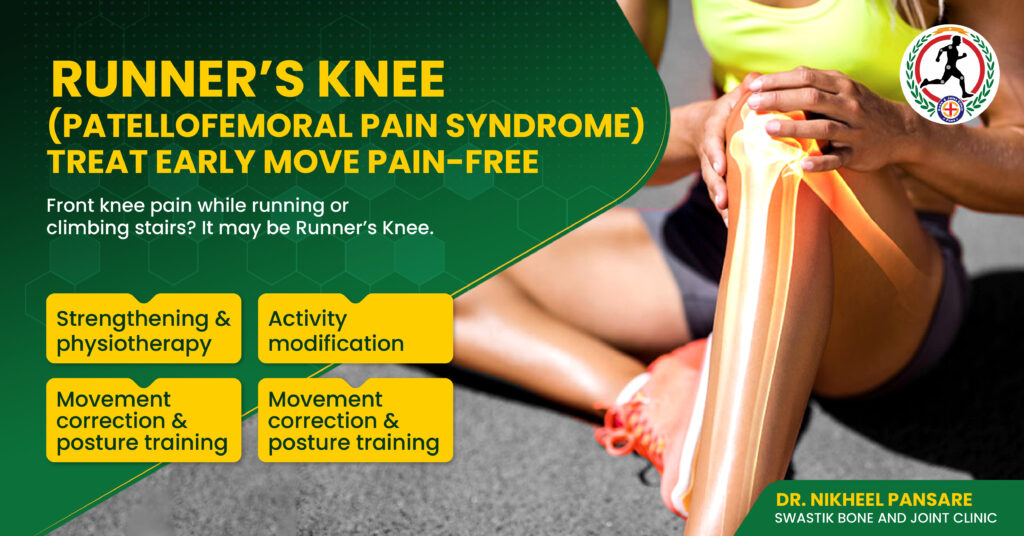
Evidence and clinical experience show that PFPS responds best to an active, structured programme rather than only rest. Key pillars of non-surgical treatment include: Activity modification (not total rest)- Reduce or pause high-impact activities like running and jumping temporarily.
- Shift to low-impact options like cycling or swimming to maintain fitness while symptoms settle.
- Quadriceps strengthening, especially the inner thigh (vastus medialis), using pain-free or low-pain exercises.
- Hip and core strengthening to improve leg alignment and reduce strain on the kneecap.
- Stretching of hamstrings, calf muscles, IT band and hip flexors to improve tracking.
- Patellar taping techniques can improve kneecap position and provide short-term pain relief so exercises are more comfortable.
- In selected cases, simple knee braces or straps are used to support the joint during activity.
- For patients with flat feet or abnormal foot mechanics, shoe inserts or orthoses can improve knee alignment and reduce patellofemoral stress.
- Short courses of anti-inflammatory medicines as advised by your doctor.
- Ice after activity to reduce pain and swelling.
When Do You Need to Think About Surgery or Arthroscopy?
Most patients with PFPS improve significantly with a dedicated non-surgical plan if they follow it consistently for several weeks. Surgery or knee arthroscopy is considered only when:- Pain persists despite a well-supervised physiotherapy and rehabilitation programme.
- There is associated cartilage damage or structural problem identified on imaging.
- Other causes of knee pain (like meniscus tears or loose bodies) coexist and need direct treatment.
When Should You See a Knee Specialist in Viman Nagar?
You should consult a specialist if:- Knee pain around or behind the kneecap lasts more than 2–3 weeks.
- Pain increases with stairs, squats, running or prolonged sitting.
- You notice swelling, repeated episodes of discomfort or limitation in sports and daily activities.